I’ve watched a lot of systems fail people. It’s what I do. I look at the architecture underneath things, households, small businesses, institutions, organizations, and I find the fractures. The places where what a system claims to be and what it actually does stop being the same thing.
But every now and then a case comes along that isn’t just a fracture. It’s a confession.
Alexia Moore is 31 years old. She’s a U.S. Army veteran. She carries a 100% disability rating for PTSD, which means the military that sent her into whatever broke her has officially acknowledged that it broke her. She came home damaged, in the way that the state itself certified and documented. And in December 2025, while managing a 22-week pregnancy in a state that has systematically dismantled the clinical infrastructure that might have helped her, she made a decision the state didn’t authorize.
Now it wants to give her life in prison for it.
If you can sit with that and not feel something shift in your chest, I don’t know what to tell you.
I. The Womb as State Property
This isn’t new. That’s the first thing to understand. What’s happening to Alexia Moore isn’t a departure from history. It’s a continuation of it, with updated statutes and a cleaner press release.
In the 19th century, the American Medical Association ran a systematic campaign to remove midwives, herbalists, and traditional birth attendants from reproductive medicine. Not because they were dangerous. Because they were competition. The fetus became the legal instrument through which female reproductive autonomy was transferred from women and their communities into the hands of licensed, institutional, overwhelmingly male medical authority. They didn’t frame it that way, of course. They never do. They called it safety. They called it progress. They called it protecting women.
What they were protecting was the monopoly.
Fast forward to 1973. The wire hanger wasn’t a political symbol someone invented. It was a description of what women actually used when the sanctioned system was closed to them. The criminalization of abortion didn’t end abortion. It just changed what abortion looked like, and who survived it.
Fast forward to 2013. Marlise Muñoz was brain-dead in a Texas hospital. Her family, her husband, and her own previously stated wishes said to remove life support. The state said no. Because she was pregnant. Texas law converted her body into a vessel, a life support machine for a fetus, stripping a dead woman of the legal right to die on her own terms because the state had a prior claim on what her body was for.
And then there’s Adriana Smith in Georgia. 2025.
II. Georgia, 2025.
Smith was a 30-year-old nurse and mother. She went to the hospital with severe headaches, was given medication, and sent home. The next morning, her boyfriend found her gasping for air. By February 19th, she was declared brain dead, legally dead, at nine weeks pregnant.
Her family wanted to remove life support. The hospital told them they couldn’t. Emory’s doctors said they would treat the baby as the patient. That she was no longer the patient. Because of the law.
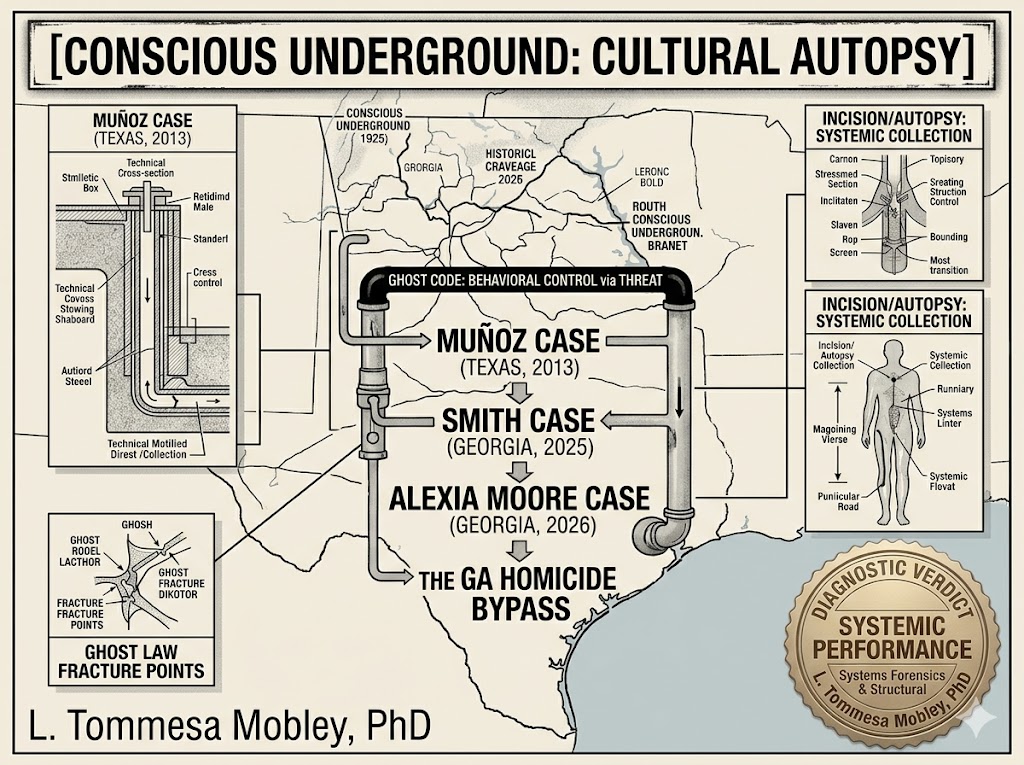
The Georgia Attorney General’s office eventually clarified that nothing in the LIFE Act required keeping a brain-dead woman on life support. The hospital kept her on it anyway, for 16 weeks, because the fear of what the law might do was enough. You don’t even have to apply a Ghost Law to change behavior. The threat of it does the work.
Smith’s son Chance was delivered by emergency C-section at around 26 weeks. He weighed 1 pound 13 ounces. Doctors had already told the family he might be blind, might not walk, might not survive outside the womb. He spent months in the NICU. His grandmother, who had no say in any of this, was left to raise him while grieving a daughter the state had converted into a vessel.
And let’s be clear about what the family was put through before any of that. They were asked. The hospital asked what the family wanted. The family said they wanted to remove life support, to let their daughter, their person, go in the way she would have chosen. That answer was heard and then set aside as if the asking had been a formality rather than a right.
Nobody asked about the grandmother’s age. Nobody asked about her health. Nobody assessed whether she had the financial resources to raise a medically fragile infant while processing the loss of her child. Nobody asked if she was equipped, emotionally, physically, practically, to become a parent again under these circumstances. The state that forced this outcome has no obligation to show up for any of what follows. It made the decision. Someone else lives with it.
There’s a word for asking someone what they want and then doing the opposite regardless of their answer. It isn’t consultation. It’s performance. And the family of Adriana Smith was subjected to that performance for 16 weeks while watching a woman they loved disappear inside a machine the state had decided she still needed to be.
III. What Was Actually Mandated
What was actually mandated here? It was not a birth. It was a specific birth; one the medical team had already flagged as likely to produce a child with severe special needs, potentially no quality of life, certainly no guaranteed survival. The state made that decision, will never have to live with it. The grandmother does. Chance does. Every day.
That is what pro-birth looks like when you follow the thread past the delivery room.
And now Alexia Moore. She didn’t go to a back alley. She accessed misoprostol through a mail-order provider, the 21st-century version of finding a way when the system has made the sanctioned path unavailable or unsafe. She went to an emergency room when she was in pain. That emergency room became the evidentiary foundation for a murder charge.
Muñoz was Texas, 2013. Smith was Georgia, 2025. Moore is Georgia, 2026. Three women. Two states. One unbroken claim.
The tool changed. The claim never did.
The womb has always been state property in this country. What changes is how openly the state decides to collect.
IV. The Door They Always Find
I’m not going to tell you what to think about abortion. That’s not what this is.
What I am going to tell you is that there’s a difference between legal and lawful and I’ve never been more certain of that distinction than I am right now.
It may be legal to charge Alexia Moore with Felony Murder. It may be legal to route around the protections that were supposed to prevent exactly this outcome. It may be legal to put a woman with 100% PTSD disability into a jail system that will almost certainly make her worse, in a facility her own government would recognize as a Trigger Architecture if it were describing the conditions that harm veterans.
None of that makes it lawful. Not in any sense that matters to me.
Because here’s what the downstream of this looks like if it holds. Women in care deserts, and there are more of them every year, will calculate whether the emergency room is safe before they go. Some of them will decide it isn’t. Some of them will die from that calculation. And the state that prosecuted Alexia Moore will never have to account for a single one of those deaths because they’ll happen quietly, at home, without a warrant or an arrest record.
The system mandated an outcome. It refused to model what that mandate produces downstream. It never asked who would raise the child, it was so determined to bring into the world. It never asked whether adoption, the alternative everyone defaults to, is actually accessible to the women most affected by these enforcement patterns. It isn’t. Not equally. Not even close.
A system that demands outcomes it won’t support isn’t protecting life. It’s performing authority.
→ Forensic Report: The Moore Collision — TommesaMobleyPhD.com
→ What the Law Doesn’t Have to Say — Constraint & Consequence
If You’re Ready to Name the Structure
If what you just read named something you’ve been living inside, in your home, your work, your community, and you want to know what the structure underneath it actually looks like, that’s exactly what the 100 Sovereigns Project is for. It’s a research initiative. One hundred forensic diagnostics. Limited slots. Being early matters here, not just because space is finite, but because the first hundred shape what this practice becomes.


Leave a Reply